Call Us Today on 01904 626388

Menu

Menu
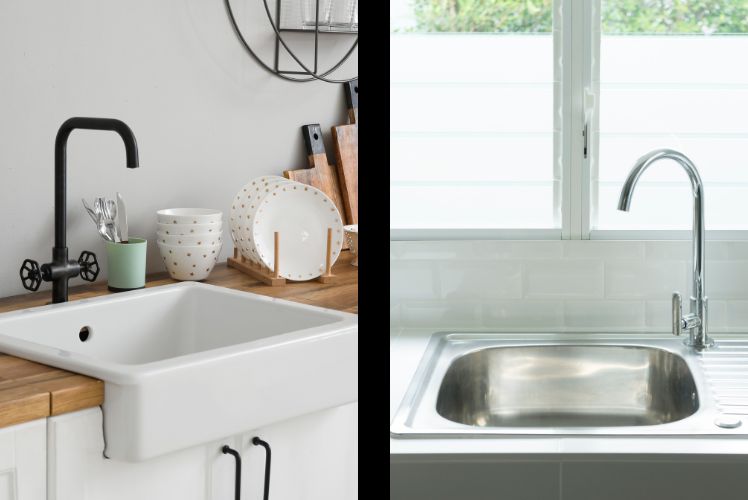
When planning a new kitchen, the sink is one of the hardest-working elements in the room. It needs to cope with daily washing up, food preparation, heat, cleaning products and the general wear and tear of busy life. The choice of sink material significantly impacts the overall aesthetic of the kitchen, making it an important design consideration.
One of the most common comparisons we’re asked about is stainless steel vs ceramic sinks. Which is more durable? Which is easier to maintain? And which suits your kitchen design best?
Both materials are proven, long-standing choices. Selecting the right sink for your kitchen means considering style, material, and functionality to ensure it meets your needs. Stainless steel and ceramic sinks are both practical options for a variety of lifestyles and budgets.
The right fit ultimately depends on your kitchen's needs and your personal preferences.
A stainless steel kitchen sink is made from steel alloyed with chromium, which gives it corrosion resistance and strength. It’s one of the most widely used sink materials in both domestic and commercial kitchens.
They come in a range of different finishes, including brushed and polished steel, allowing you to match your sink with various kitchen styles. Stainless steel sinks are lightweight and generally easier to install than ceramic sinks.
Pros
Highly resistant to heat and staining
Lightweight compared to ceramic
Works with most kitchen styles
Usually more cost-effective
Easy to install
Hygienic and non-porous
A smart choice for busy households due to ease of cleaning and resistance to mould and bacteria
Can handle hot pans directly from the stove
Generally more budget-friendly and cheaper to install than ceramic sinks
Cons
Can scratch over time
May show water marks and fingerprints
Can be noisy when water hits the surface
Water spots and smudges are common and require regular wiping
Can be noisy without sound-deadening pads
Lighter gauge models may feel less solid
The longevity of a stainless steel sink often depends on the steel gauge. Thicker steel tends to be quieter and more resistant to denting.
Stainless steel sinks are also well-suited to withstand daily wear and tear, making them a practical option for most kitchens.
A ceramic kitchen sink is made from fireclay or porcelain that has been kiln-fired at extremely high temperatures, creating a hard, smooth and glossy surface.
Ceramic sinks are known for their timeless look which creates a classic appearance in a kitchen. They often offer a rustic feel, making them a popular choice for farmhouse and cottage kitchens.
The glossy finish of ceramic sinks adds a touch of elegance and complements both traditional and modern kitchens. Ceramic sinks are often associated with traditional or Shaker kitchens, though they can work beautifully in modern spaces too, particularly in farmhouse or statement designs.
Pros
Extremely hard surface
Resistant to scratches from everyday use
Highly stain resistant
Classic, timeless appearance
Retains colour well
Non-porous surface repels bacteria and resists stains, making cleaning easy and hygienic
Can maintain their appearance for decades with proper care
Can enhance a kitchen's resale value due to their high-end appearance
Cons
Heavier than stainless steel
Can chip or crack if struck with heavy cookware or subjected to heavy impact
Usually higher in cost; generally more expensive than stainless steel sinks
Requires strong cabinet support
When weighing up the pros and cons of ceramic sinks, weight is a key consideration. Ceramic sinks are made from clay fired at high temperatures, resulting in a tough and non-porous surface. They are heavier than stainless steel sinks and often require reinforced cabinetry for support during installation.
Both can last decades if properly installed and maintained. The difference lies more in how they age. Both stainless steel and ceramic sinks are long-lasting but fail differently under heavy use; ceramic may crack or chip, while stainless steel may dent or scratch.
Stainless steel develops surface scratches over time but remains structurally sound and is resistant to cracking, chipping, and peeling.
Ceramic maintains its glossy finish but may be vulnerable to chipping or cracking if subjected to heavy impact.
Cleaning a ceramic sink is generally straightforward. The glazed surface resists staining and doesn’t absorb odours.
For day-to-day care:
Use a soft cloth or sponge
Avoid abrasive pads
Use mild soap and a soft cloth for cleaning
Rinse thoroughly to prevent residue build-up
It is important to clean ceramic sinks with gentle materials, such as mild soap and a soft cloth, to maintain their glossy finish and prevent damage.
Occasional deeper cleaning with bicarbonate of soda can help maintain brightness.
Stainless steel is also easy to maintain but benefits from regular wiping to prevent water marks and water spots, which are common issues that can affect the appearance of the sink.
To keep it looking its best:
Wipe dry after use
Avoid leaving metal pans sitting for long periods
Clean along the grain of the steel
Use non-abrasive cleaners
Use mild detergent and a soft sponge to avoid scratches
Scratches are inevitable over time, but many people see this as part of the natural ageing process.
Beyond durability, the aesthetic difference between stainless steel vs ceramic sinks is significant.
Stainless steel works great in:
Contemporary kitchens
Minimalist spaces
Handleless designs
Kitchens with quartz or composite worktops
Ceramic kitchen sinks often suit:
Shaker kitchens
Traditional homes
Farmhouse styles
Properties with character features
In many York homes, particularly period properties, ceramic sinks feel in keeping with the architecture. In newer extensions and open-plan spaces, stainless steel often enhances the clean, modern lines.
For households where heavy pots, cast iron pans and baking trays are used frequently, stainless steel can be more forgiving. It won’t chip if knocked. Stainless steel sinks are a practical choice for busy kitchens, as they are durable and can handle heavy dishes and daily wear without damage.
For those prioritising scratch resistance and a bright, classic finish, ceramic may feel more robust on the surface. Ceramic sinks are also practical for those who want a sink that resists stains from dishes and maintains its appearance over time.
It’s less about which is stronger, and more about how your kitchen is used.
Ask yourself:
Do you prefer a modern or traditional look?
Are you concerned about chipping or scratching?
How heavy are the items you typically wash?
Do you want a sink that develops character or keeps a glossy finish?
There are also other sink materials available, each with their own pros and cons, which may be worth considering depending on your requirements and compatibility with different kitchen worktops.
Both options are durable. Making the right choice involves considering maintenance and style, while the right fit depends on your specific needs and kitchen design. The best choice is the one that fits your kitchen design and daily routine.
The feel and finish of these materials can be hard to judge online.
We design and install bespoke kitchens across York and the surrounding area. In our kitchen showroom, you can compare stainless steel and ceramic sinks in real kitchen displays, alongside different worktops and tap styles.
If you’re planning a new kitchen and weighing up stainless steel vs ceramic sinks, we’d be happy to guide you through the options.
Visit our York showroom or book a design appointment to start planning your kitchen with confidence.
Ceramic sinks are highly scratch and stain resistant, but can chip if hit hard. Stainless steel won’t chip but may scratch over time. Both are long-lasting when properly installed.
High-quality stainless steel contains chromium, which prevents rust. Proper care and cleaning help maintain its resistance.
No. Cleaning a ceramic sink is usually simple with mild cleaning products and a soft cloth. The glazed surface resists staining.
Yes. While often associated with traditional styles, ceramic sinks can work well in modern kitchens, particularly in apron-front or statement designs.
Boiling Water Tap: Is It Worth It in a Family Kitchen?
Single Bowl vs 1.5 Bowl Kitchen Sinks: Which Is Right for You
Inset vs Undermount Sinks: Pros, Cons & Design Considerations