Call Us Today on 01904 626388

Menu

Menu
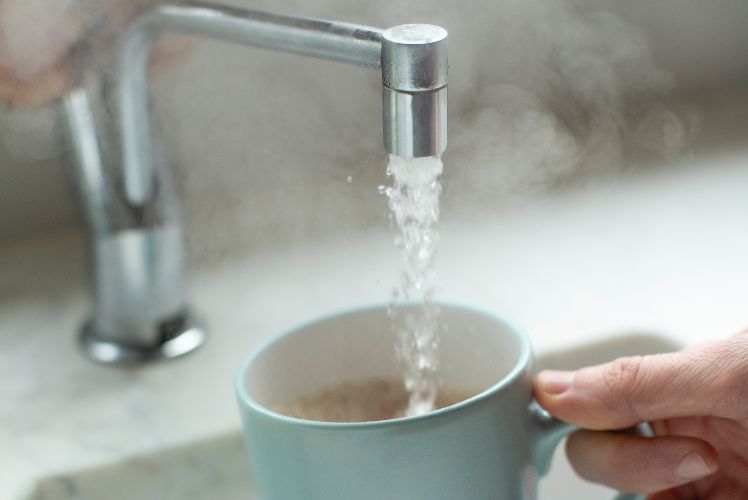
Boiling water taps have become increasingly popular in modern kitchens. They promise instant hot drinks, faster cooking prep and less clutter on the worktop. But are they simply a luxury feature, or do they genuinely improve everyday life?
If you’re considering a boiling water tap, it’s worth understanding how they work, how energy efficient they are and whether they suit a busy family kitchen.
A boiling water tap is a specialist kitchen tap that has become a popular kitchen appliance due to its convenience and simple design. It is connected to the mains water supply and features a small insulated boiler tank, usually stored in the cabinet beneath the kitchen sink. The boiler tank keeps water heated and ready to dispense at near boiling temperature instantly, making these taps highly efficient for everyday kitchen tasks.
Many models are “3-in-1” or “4-in-1” kitchen taps, providing:
Standard hot and cold water
Filtered water
Filtered cold water
Near-boiling water
Sparkling water (in some premium models)
A common question is: how does a boiling water tap work?
Boiling water taps work by drawing water directly from the mains supply into a dedicated boiler tank installed under the sink. This boiler tank keeps water at a near-boiling temperature, typically around 98–100°C, ready for instant use.
The system consists of:
An insulated boiler tank that heats and stores water
A filter system (in most cases)
A specially designed hot water tap with safety mechanisms
The boiler tank is typically insulated and ranges from 2L–7L in size, helping to maintain the water at the desired temperature while reducing energy usage.
When the tap is activated, the system provides instant boiling water at the desired temperature, which users can often adjust for convenience and safety. The tap delivers only the amount of boiling hot water needed to fill your mug or pan, reducing water waste and improving energy efficiency compared to traditional kettles. Boiling water taps often feature safety mechanisms, such as a two-step activation process, to prevent accidental dispensing of boiling hot water.
The insulation is designed to minimise heat loss, meaning the system does not continuously reboil large volumes of water. Compared to traditional methods like kettles, instant boiling water taps provide instant boiling water, are more energy efficient, and offer greater convenience for both home and office environments.
When asking are boiling water taps worth it?, the answer depends on how you use your kitchen.
Boiling water taps are often seen as expensive compared to a regular kettle or standard kettle, with a higher initial cost for purchase and installation. However, they can be cost effective in the long run, offering significant cost savings and energy savings over time.
The annual running cost of a boiling water tap is usually between £31 and £38, compared to over £100 for boiling a full kettle multiple times a day. The average cost of running a boiling water tap is around 3p per day, while the average kettle costs about 2.5p per boil. For an average household that boils water several times daily, these savings can add up quickly.
Boiling water taps use less energy than traditional kettles, with some models using up to 50% less energy. This is because they heat only the amount of water needed, reducing wasted energy and water waste. Kettles, especially when overfilled, often lead to water waste and wasted energy, while boiling water taps provide hot water on demand in precise amounts. This makes them more eco and a more energy-efficient choice, especially for frequent users.
You make multiple hot drinks each day
You regularly cook pasta, rice or vegetables
You want a cleaner worktop without a kettle
You value convenience and speed
You want instant boiling water or instant hot water for making several cups of tea or preparing food quickly
Boiling water taps deliver hot water instantly and only in the amount required to fill your mug or pan, making them ideal for frequent tea drinkers or busy families.
For many families, the ability to fill a saucepan instantly or prepare bottles more quickly becomes a genuine day-to-day benefit rather than a novelty.
However, they do represent an upfront investment, both in the tap itself and in professional installation.
This is another common misconception. Boiling water can kill certain bacteria and microorganisms, but it does not remove dissolved chemicals or minerals. Similarly boiling tap water can reduce some chlorine content, but it does not completely eliminate all impurities.
Many boiling water tap systems include built-in filters that improve taste and reduce certain contaminants. However, they are not water purification systems in the medical sense.
High-quality boiling water taps include integrated filtration systems to prevent limescale accumulation. Replacement filters should be changed every 6 to 12 months to maintain performance, water quality, and to prevent limescale buildup.
For families, safety is naturally a concern.
Reputable boiling water tap systems include:
Child-proof push-and-turn mechanisms
Safety button that must be held down to dispense boiling water, requiring a two-step process for activation
Insulated spouts and tap bodies to prevent the exterior from becoming hot to the touch
Aerated flow and controlled water pressure to reduce splashing and spitting of steaming water
Safety cut-offs
Separate hose for boiling water to minimize the risk of accidental scalding from residual hot water
When properly installed and used correctly, boiling water taps are designed to be no more hazardous than a kettle full of boiling water. In fact, some parents prefer them because they remove the need for a heavy kettle that can be pulled down.
Proper boiling water tap installation is essential.
Installation involves:
Positioning the insulated tank within the sink cabinet
Connecting to water supply and power
Ensuring correct ventilation space
Fitting and testing safety features
While it is possible to install a boiling water tap as a DIY project, professional installation is often recommended due to the electrical and plumbing requirements. Installing a new tap, such as an instant hot water tap or instant boiling water tap, can be straightforward, especially if you are replacing an existing monobloc tap.
Cabinet space must be planned carefully, particularly in smaller kitchens. The tank will take up some under-sink storage, which is worth considering during the design stage.
When planning a new kitchen, we always account for this at the outset so there are no compromises later.
Beyond practicality, boiling water taps are available in a wide range of finishes:
Chrome
Stainless steel
Black
Brushed brass
This makes them easy to integrate into both traditional and contemporary kitchens.
They work particularly well in:
Open-plan kitchens where clutter is visible
Minimalist designs without small appliances on show
Kitchen islands where a statement tap enhances the space
Installing a boiling water tap can also help create more space on the worktop by removing the need for a kettle, which is especially beneficial in small or minimalist kitchens.
When paired with carefully chosen worktops, they can feel like a natural part of the design rather than an add-on feature.
In addition to the initial purchase and installation, you should consider:
Replacement filters (should be changed every 6 to 12 months to prevent limescale buildup and maintain system performance; these maintenance expenses contribute to the ongoing costs)
Electricity usage
Occasional servicing
Most systems are low maintenance, but filters are essential to maintain water quality and system performance.
Not necessarily.
They may not suit:
Very small kitchens with limited cabinet space
Households that rarely use hot drinks
Renovations where budgets are tight
When considering a boiling water tap, it's important to find the best boiling water tap for your home by comparing different brands and models to suit your budget and needs. However, in many modern family kitchens, they quickly become one of the most appreciated features.
The key is understanding your routine and whether instant access to boiling water will genuinely simplify it.
We design and install bespoke kitchens across York and the surrounding area. In our kitchen showroom, you can discuss boiling water taps with our advisors, compare finishes and see how they integrate with different sinks and worktops.
If you’re considering a boiling water tap and would like tailored advice, we’d be delighted to help.
Visit our York showroom or book a design appointment to explore options.
Many modern systems are well insulated and use low standby energy. In high-use households, they can be comparable to or more efficient than repeatedly boiling a kettle.
It uses an insulated tank stored beneath the sink to keep water heated and ready to dispense instantly when activated.
Boiling kills certain bacteria but does not remove all chemicals or minerals. Many systems include filters to improve taste and reduce impurities.
Installation requires professional fitting, electrical connection and correct ventilation space. Planning this during kitchen design is recommended.
Stainless Steel vs Ceramic Sinks: Which Lasts Longer
Single Bowl vs 1.5 Bowl Kitchen Sinks: Which Is Right for You
Inset vs Undermount Sinks: Pros, Cons & Design Considerations